

Transforming a neglected yard into an inviting outdoor sanctuary is one of the most rewarding home improvement projects you can undertake. Beyond the immediate aesthetic payoff, a well-planned outdoor makeover dramatically enhances how you live, extending your usable living space straight into the fresh air while building tangible long-term property value. However, large-scale outdoor projects can quickly become chaotic. Without a clear strategy, ambitious homeowners often face unexpected property damage, ruined root systems, blown budgets, and ruined turf caused by doing steps in the wrong order.
The secret to a successful, stress-free property makeover isn’t just picking the prettiest plants or the stylish patio stone—it’s execution and sequencing. By tackling heavy site preparation before delicate finishing touches, you protect your investment, prevent costly rework, and ensure every dollar spent builds toward a cohesive vision. Whether you are dealing with an overgrown forest patch, an uneven lot, or an outdated lawn, approaching your renovation in logical phases keeps your budget intact and your property protected. Here is the step-by-step roadmap to executing a total yard transformation smoothly.

Assessing Your Property and Mapping Out the Master Plan
Every successful outdoor transformation begins long before heavy machinery rolls onto the lawn. Before spending a dime on materials or hiring contractors, you need a comprehensive assessment of your site’s natural layout, drainage patterns, sunlight exposure, and existing vegetation. Walk your property at different times of the day to observe how light moves across the yard and where water naturally pools after a heavy rain. Identifying low spots or erosion-prone slopes early will dictate where functional hardscaping or underground drainage must go.
Creating a master design plan allows you to visualize the finished product while breaking the work down into manageable, budget-conscious phases. A solid master plan accounts for access routes, ensuring heavy equipment can move in and out of the yard without crushing existing structures or underground utilities. It also prevents one of the most expensive mistakes in residential outdoor design: installing expensive features like sod or decorative paving, only to tear them up later to run electrical lines or water pipes. Designing with a holistic view ensures every upgrade builds upon the last.
Pruning and Canopy Management for Health and Safety
Once your plan is set, look upward before focusing on the ground. Overgrown, unstable, or poorly maintained trees pose a direct threat to heavy machinery, crew safety, and your home’s roofline. Performing targeted canopy maintenance first clears the overhead space required for site equipment and allows natural sunlight to reach areas where you eventually plan to establish lawns or flower beds.
Clear away deadwood and hazardous branches to prevent falling debris from damaging ground equipment. Elevating lower limbs creates clear access routes for heavy machinery and work crews, while thinning a dense canopy increases sunlight penetration to encourage healthy plant growth. Proper tree trimming removes deadwood, lifts low-hanging limbs that block equipment pathways, and thins dense foliage to encourage healthy air circulation. Opening up the canopy early gives you an accurate sense of how much sunlight your future lawn and gardens will actually receive, allowing you to select the right grass seed and plant varieties with confidence.
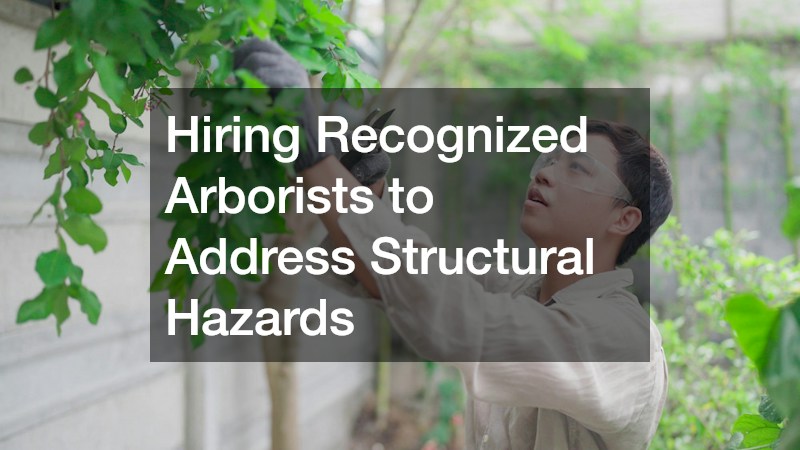
Hiring Recognized Arborists to Address Structural Hazards
While basic pruning can clear space, larger structural issues or dangerous tree specimens require specialized evaluation. Unstable trunks, rotting root systems, or massive oak branches hanging over power lines are not DIY tasks, nor should they be handled by general laborers. Bringing in certified professionals guarantees that high-risk removals and deep canopy work are performed safely using specialized rigging and crane equipment.
Partnering with established tree companies ensures that your property is evaluated with a trained eye for disease, structural integrity, and long-term risk. These specialists can identify whether an ailing tree can be saved through cabling and deep-root fertilization or if complete removal is necessary to protect your home’s foundation. Addressing major tree removals during the initial site prep phase protects your budget by eliminating the risk of a mature tree collapsing onto newly installed patios or custom gardens later.
Professional Removal of Hazardous and Invasive Trees
When a tree is diseased, dead, or standing directly in the footprint of a planned patio, pool, or driveway, complete extraction becomes unavoidable. Removing large trees is a delicate surgical operation on your property. Professional crew operations utilize controlled dismantling techniques, lowering heavy wood sections piece by piece to prevent deep gouges in the surrounding soil or damage to nearby structures.
Utilizing dedicated tree services ensures that both the above-ground biomass and the below-ground disruption are managed efficiently. Professionals don’t just cut down the trunk; they evaluate how the removal impacts surrounding soil stability and moisture levels. Furthermore, professional stump grinding removes the core root ball below grade, preventing fungal growth and pest infestations like termites or carpenter ants. This allows you to grade and pave directly over the area without fear of future sinkholes as wood decays.
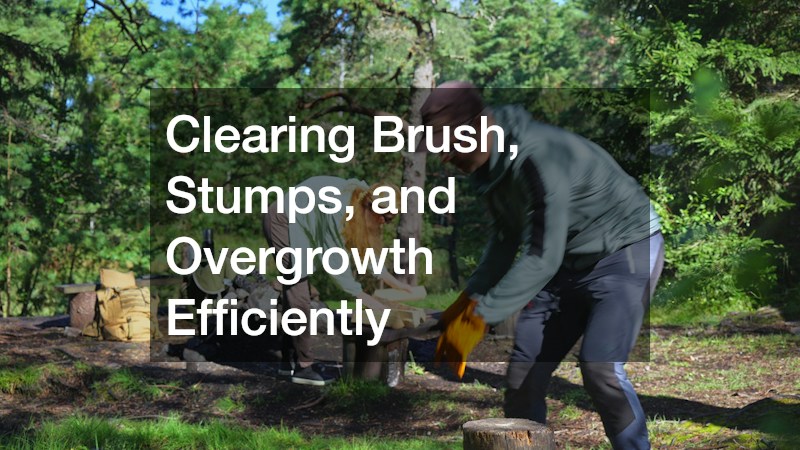
Clearing Brush, Stumps, and Overgrowth Efficiently
With overhead hazards mitigated and unwanted trees removed, the next focus is clearing the forest understory, invasive brush, rock piles, and tangled root networks. Dense brush and wild thickets hide grade changes, rocks, and debris that can damage standard lawn equipment or derail hardscaping projects. Clearing the slate completely gives contractors an unobstructed view of the true topography.
The process flows naturally from overhead canopy management to complete land clearing and debris removal. Stripping away brush and stumps creates a true blank canvas, which allows for precise excavation, terrain reshaping, and the eventual installation of permanent hardscaping and underground utilities. Hiring specialized land clearing services is the most efficient way to convert chaotic overgrowth into a clean, workable space. Heavy-duty forestry mulchers and root rakes clear acres of dense brush in a fraction of the time it takes manually, turning unwanted vegetation into beneficial organic mulch right on site and revealing hidden elevation drops for precise earthmoving.
Precision Earthmoving, Grading, and Soil Preparation
With the property fully cleared, the focus shifts to shape and contour. Proper grading is arguably the most critical technical step in any yard makeover because it dictates how water moves across your land. Poor drainage leads to flooded basements, standing water that breeds mosquitoes, and soil erosion that ruins expensive outdoor features.
Professional excavating establishes smooth contours, redirects surface runoff away from home foundations, and carves out level pads for hardscapes, retaining walls, and outdoor living zones. Using skid steers, mini-excavators, and laser levels, earthmoving crews ensure that subgrades are properly compacted to prevent settling. Taking the time to properly shape the land prevents catastrophic water damage during heavy storms and ensures that future patios and lawns sit on a stable, well-drained foundation.
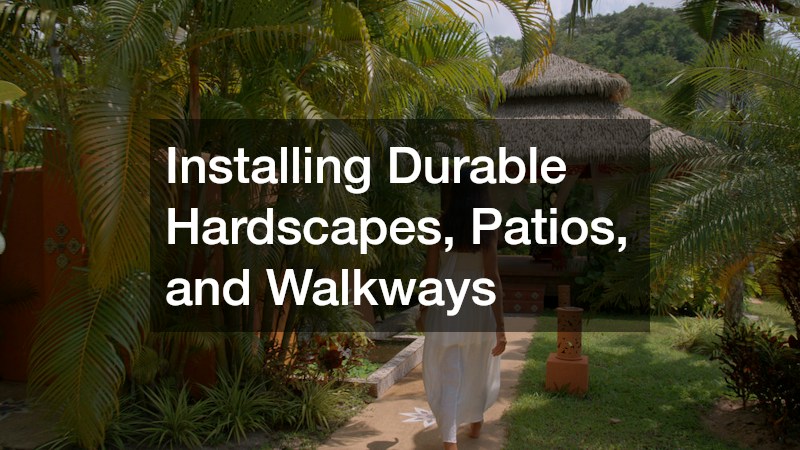
Installing Durable Hardscapes, Patios, and Walkways
With a stable, graded sub-base in place, construction on permanent hardscape features can begin. Hardscaping forms the structural backbone of your outdoor living space—defining pathways, creating distinct functional zones for dining and entertaining, and offering low-maintenance ground cover that balances soft green turf.
The construction phase starts by excavating the sub-base to a proper depth based on soil type and expected structural load, followed by laying and compacting aggregate base material in firm, even lifts. Contractors carefully verify slopes to maintain a minimum pitch away from home structures, install durable edge restraints to keep pavers locked, and lay pavers or pour concrete with precision control joints to mitigate cracking. Working with experienced paving contractors ensures that driveways, stone patios, and walkways are built to withstand freeze-thaw cycles and heavy loads. Executing all heavy masonry and concrete work before planting softscapes ensures that heavy trucks and equipment don’t ruin newly planted lawns or delicate flower beds.
Subsurface Utility Lines and Underground Watering Systems
Before laying topsoil, grass seed, or sod, you must install the invisible infrastructure that keeps your yard healthy and functional. Running underground utilities—such as low-voltage lighting wires, gas lines for fire pits, and automated watering lines—while the soil is still exposed saves thousands of dollars in labor and prevents damaging finished surfaces.
Investing in a high-efficiency sprinkler system eliminates the tedious chore of dragging hoses around the yard while guaranteeing that your new plants and lawn receive precise, scheduled moisture. Underground distribution lines and pop-up spray heads are buried safely beneath the frost line or rototilling depth, protecting them from foot traffic and mower blades. Installing these systems prior to final planting ensures that every zone of your property receives targeted hydration without leaving unsightly trenches in fresh turf.
Custom Irrigation Design for Healthier Turf and Gardens
Not all plants require the same amount of water, and overwatering can be just as destructive to a yard budget as a drought. A uniform watering approach often leads to overspray on hardscapes, wasted water bills, and root rot in sensitive species. Tailoring watering zones to match your specific plant groupings, soil type, and sun exposure is vital for long-term health.
Partnering with a dedicated lawn irrigation service ensures your system is designed with smart controllers, rain sensors, and targeted drip zones for garden beds alongside high-efficiency spray nozzles for turf areas. Modern smart systems adjust watering schedules automatically based on real-time weather forecasts, preventing unnecessary watering during rainstorms. Professional calibration guarantees optimal water pressure and head-to-head coverage, protecting your softscape investment while keeping operational utility costs low.
Designing Vibrant Garden Beds and Outdoor Living Features
With all underground utilities, hardscaping, and irrigation systems safely installed, you can finally focus on the artistic elements that bring your property to life. Softscaping introduces texture, color, privacy, and seasonal interest to your yard through a thoughtful blend of trees, shrubs, perennials, and ground covers.
Designing a rich landscape involves layering plants by height and function across your property. The overstory layer utilizes shade trees and screening evergreens to build structure and privacy, while the midstory layer adds depth with flowering shrubs and ornamental grasses. Beneath these, an understory layer of perennials and ground covers fills space with vibrant color and texture, all tied together by functional turf lawn zones. Comprehensive landscaping softens hard stone edges and frames outdoor rooms. Choosing native species adapted to your local climate reduces maintenance requirements and fertilizer needs, ensuring your new garden thrives effortlessly season after season.
The final phase of a total yard makeover is establishing a thick, green lawn across all exposed soil areas. While laying traditional sod offers instant gratification, it can be prohibitively expensive for large acreage or expansive open yards. Traditional broadcast seeding, on the other hand, is cheap but highly vulnerable to washouts, bird consumption, and patchy germination. Hydroseeding bridges this gap by spraying a nutrient-rich slurry that binds directly to the topsoil, protecting seeds from wind, rain, and hungry wildlife while locking in moisture. Contracting specialized hydroseeding companies ensures your custom seed blend is applied with professional precision, delivering uniform germination and a vibrant, healthy lawn that completes your property makeover without breaking the bank.
A complete hydroseeding mix combines a premium seed blend formulated for your property’s microclimate with a wood fiber or paper mulch that holds moisture against the seed to accelerate germination. Starter fertilizer is added to supply essential nutrients directly to developing root systems, while a non-toxic tackifier binds the slurry blend to topsoil, locking seeds in place against rain washouts. Contracting specialized hydroseeding companies offers the ideal middle ground for cost-effective, rapid lawn establishment. This process sprays the slurry directly onto prepped topsoil, shielding seeds from erosion on slopes and yielding a uniform, weed-free lawn in a fraction of the time of conventional seeding—completing your property’s total transformation smoothly, beautifully, and within budget.
Executing a total yard makeover without damaging your property or blowing your budget comes down to one principle: doing the right work in the right order. By starting with site evaluation, addressing canopy and tree hazards, handling heavy earthmoving and hardscaping early, and finishing with automated irrigation and hydroseeding, you eliminate costly mistakes and enjoy a seamless transformation. With a clear roadmap in hand, you can confidently turn your yard into a stunning, functional space that elevates your lifestyle and protects your home’s value for years to come.