Spring fever hits and suddenly you are elbow-deep in soil, planning raised beds and ordering seed packets before the last frost has even cleared. But your yard does not exist in a bubble separate from your house, and the systems that keep your home running often share the same seasonal rhythms as your garden. Tackling both on a coordinated calendar saves you money, prevents overlapping headaches, and makes sure a blooming garden is not undone by a leaking roof or a failing furnace. This guide walks through the home maintenance tasks that deserve a spot right next to your planting schedule.
Spring Gutter Checks Before You Plant Beds Below Them
Early spring is prime time for both seed starting and gutter inspection, and doing them together just makes sense. Gutters clogged with winter debris will overflow directly onto flower beds and vegetable patches positioned along the foundation, drowning young plants before they get established. A single clogged downspout can dump several hundred gallons of water onto one spot during a heavy spring storm, which is more than enough to waterlog seedlings or wash mulch and topsoil right out of a bed. Before you touch a trowel, grab a ladder and clear out leaves, seed pods, and granules of shingle grit that accumulated over winter. While you’re up there, check that gutter seams, end caps, and downspout elbows are intact, since a cracked joint can redirect water to a completely different part of the bed than you expect. It’s also worth running a hose through the system for a few minutes to confirm water exits the downspout extension cleanly, rather than pooling under the gutter edge. Walking the perimeter of your house to check downspouts gives you a natural opportunity to also assess soil drainage patterns in the exact beds you are about to till. Look for telltale signs like erosion channels, standing water, or moss growth, all of which suggest you should either regrade the soil, add a splash block, or shift your planting line a foot or two farther from the foundation. Taking care of this now, before seeds or transplants go in the ground, saves you from having to dig everything up mid-season once you discover a drainage problem the hard way.
Before you dig a single hole, walk the perimeter of your house and look up. Water pooling near the foundation, streaking stains on siding, or dark algae trails below the roofline are all signs that gutters need clearing or repair before planting season gets underway. Sagging gutter sections or granules from asphalt shingles collecting in the downspout are also worth flagging, since both point to drainage issues that will only get worse once beds below them are full of soil and mulch. This matters more than it seems, because whatever you plant directly beneath a faulty gutter will take the brunt of the overflow all season long. A clogged gutter during a heavy spring storm can dump gallons of water in one spot within minutes, which is more than enough to drown young seedlings, erode fresh mulch, or wash out newly placed edging. Checking gutters first means you can adjust your bed layout, extend downspouts, or add splash blocks before you’ve invested time and money into plants that won’t survive the runoff. Pairing this inspection with your garden prep also means you catch problems while you are already outside with tools in hand, on a ladder, or checking the roofline anyway. It’s far more efficient than discovering them mid-summer during a storm, when you’re stuck choosing between protecting your plants or scrambling to fix a gutter in the rain.
- Clear gutters and downspouts of winter debris before mulching nearby beds — clogged gutters overflow directly onto the soil you’re about to plant
- Flush downspouts with a hose to confirm water exits at least 3-4 feet from the foundation and future bed edges
- Redirect or extend downspout extensions away from new plantings to prevent water-logged roots and soil compaction
- Check for sagging gutter sections or loose hangers that pool water near the foundation, since standing water spots are poor choices for root vegetables or delicate perennials
- Note any erosion patterns, bare soil channels, or silt deposits that reveal where runoff concentrates, and use that information to guide raised bed placement
- Consider adding splash blocks or gravel trenches under problem downspouts before planting, rather than after beds are established
Roof Inspections Timed to Your Outdoor Planting Calendar
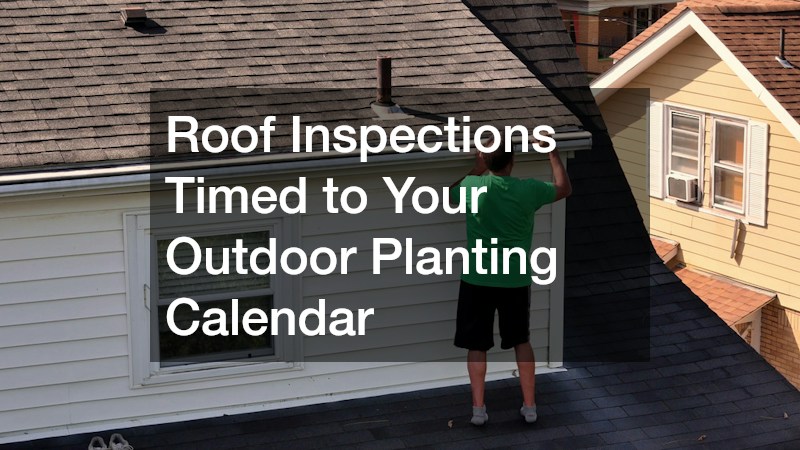
Your roof takes a beating all winter, and the same early spring walk-around you do for garden planning is the perfect moment to look up as well as down. Missing shingles, cracked flashing, or granule buildup in gutters are signs that your roof needs attention before summer storms arrive. Since many roofing companies offer free seasonal inspections, scheduling one during the same week you are prepping garden beds keeps both tasks on your radar at once.
Timing matters here because a roof repair crew working overhead can drop debris, ladders, and foot traffic right into freshly planted beds below. Getting the roof assessed and any repairs scheduled before you plant delicate seedlings near the house avoids that conflict entirely. It also means if work is needed, it happens while your garden is still just dirt and plans rather than established growth.
- Inspect shingles for curling, cracking, or missing pieces each spring
- Check flashing around chimneys and vents for gaps
- Clear valleys of debris that trap moisture against the roof deck
- Schedule any major repairs before planting delicate beds nearby
HVAC Tune-Ups That Align With Your Growing Season
Just as you test your irrigation system before the growing season begins, your heating and cooling equipment deserves the same proactive check. Spring is when many homeowners realize their furnace struggled all winter, and it is also when cooling systems need to be verified before summer heat arrives. Scheduling heating repair in the shoulder season between winter and summer means you avoid the rush that hits service companies once temperatures spike.
Think of your HVAC system like your garden irrigation setup. Both need seasonal verification to perform when you need them most, and both are easy to forget until they fail at the worst possible time. A quick professional check during your garden planning weekend can catch small issues before they become expensive breakdowns in July or January.
- Replace furnace and AC filters each season change
- Test thermostat calibration before extreme weather arrives
- Clear vegetation and debris away from outdoor condenser units
- Schedule professional tune-ups during spring and fall transitions
Fall Leaf Cleanup and Furnace Readiness Working Together

As your garden winds down for the season and you are raking leaves, bagging spent plants, and cutting back perennials, your furnace is sitting idle after months of disuse. This overlap in timing is not a coincidence worth ignoring. The same crisp fall day you spend clearing garden debris is an ideal moment to also schedule furnace repairs or a tune-up before the heating season demands full performance.
Furnaces that sat unused all summer can develop issues with ignition systems, pilot lights, or worn belts that only show up once you flip the system on for the first cold night. Catching these problems during your fall garden cleanup week, rather than waiting for the first freeze, means you are not scrambling for emergency service when technicians are booked solid. It also means your home stays comfortable while your garden beds get tucked in with mulch for winter.
- Clear leaves and debris away from outdoor HVAC equipment
- Test heating systems before the first hard freeze
- Replace batteries in thermostats and carbon monoxide detectors
- Schedule professional inspection while garden cleanup is already underway
Outdoor Faucet and Pipe Checks Before First Frost
Disconnecting garden hoses and draining irrigation lines before winter is a task most gardeners already know to do, but it pairs naturally with checking the plumbing that feeds those systems. Outdoor spigots left connected to hoses can freeze and crack, sending that damage back into interior pipes once temperatures drop. Walking the exterior of your home to winterize garden water sources is the same walk you should take to inspect visible pipes for leaks or corrosion.
Inside the house, slow drains often get ignored until they become a real problem, and fall is a good time to address them before holiday guests and heavier household use begin. A proactive drain cleaning appointment before winter sets in prevents backups that are far more unpleasant to deal with once the ground outside is frozen and any exterior cleanout access is buried in snow. Handling both garden water lines and household drains in the same seasonal sweep keeps your whole water system running smoothly.
- Drain and store garden hoses before the first freeze
- Insulate exposed outdoor spigots and pipes
- Check indoor drains for slow flow before winter guest season
- Address minor clogs early rather than waiting for a full backup
Supplemental Heating and Cooling for Converted Garden Spaces
Many gardeners eventually convert a sunroom, greenhouse, or garage space into a hybrid area for overwintering plants or starting seeds early. These spaces often lack proper ducted heating and cooling, which creates a temperature control challenge right when your plants need it most. A ductless mini split system is a popular solution for exactly this kind of space, since it can heat or cool a single room without requiring the ductwork a whole-home system needs.
If you are serious about extending your growing season with a dedicated indoor plant space, think about climate control at the same time you plan the room itself. Installing temperature control equipment before you fill the space with seedlings avoids the scramble of trying to retrofit a solution once your plants are already struggling in an overheated or overly cold room. Planning this alongside your broader home maintenance calendar means the installation gets scheduled with the same seasonal foresight as everything else.
- Measure the square footage of converted spaces before choosing equipment size
- Consider insulation quality before investing in supplemental heating
- Plan installation timing around when seedlings will actually need the space
- Factor in energy costs for year-round use of a dedicated grow room
Your garden and your house are part of the same connected system, and treating their maintenance schedules as separate calendars means you are more likely to miss something important. By syncing gutter checks, roof inspections, HVAC tune-ups, and plumbing care to the same seasonal rhythm as your planting and harvest work, you create one streamlined checklist instead of two competing ones. Start by marking your next garden prep day on the calendar and adding one home maintenance task to that same weekend. Over a full year, this combined approach protects both your home’s systems and the garden you have worked hard to grow.